Cambridge Primary Checkpoint · Science 0097 · Stage 6 · Earth and space
The Solar System and the Phases of the Moon
The Sun, the eight planets and the Moon — where they are, how they move, and why the Moon seems to change shape during its monthly cycle.
British & IGCSE › Checkpoint 6 › Checkpoint 6 Science — Complete Course
- Describe where the Sun, the planets and the Moon are in the Solar System compared with each other, and how they move (6ESs.01).
- Observe and describe how the appearance of the Moon changes during its monthly cycle (6ESs.02).
- Skills used on this page: using diagrams as models (6TWSm.02), observing over time, reading data from a table and describing a pattern.
Key words
| Word / phrase | Meaning / use |
|---|---|
| Solar System | المجموعة الشمسية — the Sun and everything that orbits it |
| star | نجم — a huge ball of hot gas that gives out its own light; the Sun is a star |
| planet | كوكب — a large, round object that orbits a star |
| moon | قمر — a natural object that orbits a planet; the Earth has one Moon |
| orbit | مدار / يدور حول — the path of one object around another; also the verb 'to orbit' |
| axis / spin (rotate) | محور / يدور حول نفسه — the imaginary line a planet spins around |
| gravity | الجاذبية — the pulling force that keeps the planets in orbit around the Sun |
| reflect | يعكس — bounce light back; the Moon and planets reflect sunlight |
| phases of the Moon | أطوار القمر — the different shapes of the lit part of the Moon that we see during a month |
| waxing / waning | متزايد / متناقص — the lit part we see is getting bigger / getting smaller |
| crescent | هلال — a thin curved shape of the Moon |
| gibbous | أحدب — more than half, but not all, of the Moon's face is lit |
1. The Solar System
The Sun is at the centre of the Solar System. It is a star — a huge ball of very hot gas that gives out its own light and heat. Eight planets travel around the Sun in paths called orbits. The Sun's gravity pulls on the planets and keeps them in their orbits.
- Order from the Sun: Mercury, Venus, Earth, Mars, Jupiter, Saturn, Uranus, Neptune.
- A sentence to help you remember: My Very Easy Method Just Speeds Up Naming.
- Inner planets (Mercury, Venus, Earth, Mars) are small and rocky.
- Between Mars and Jupiter is the asteroid belt — millions of rocky lumps that also orbit the Sun.
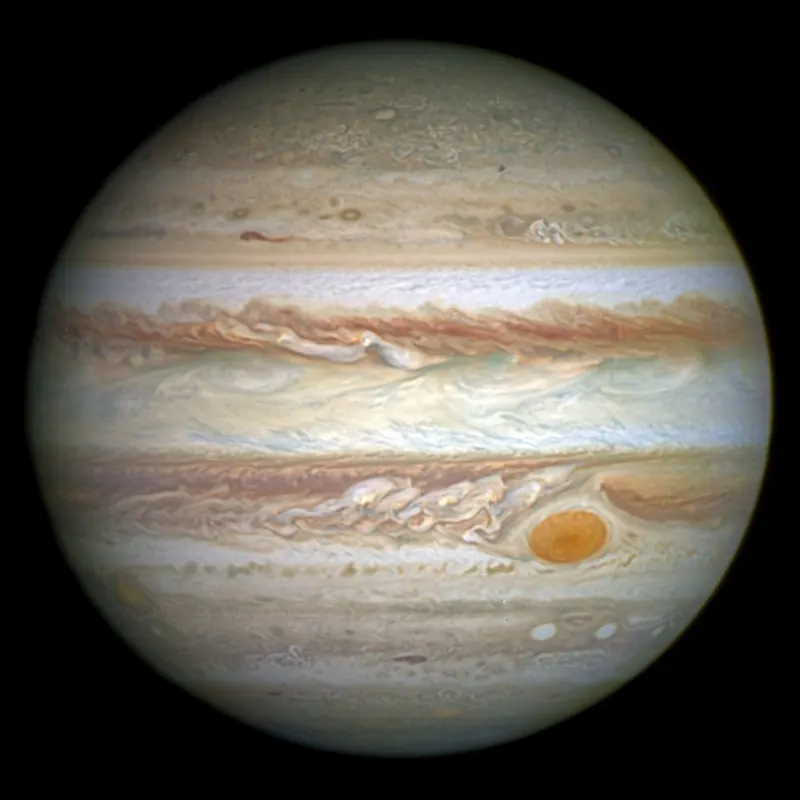
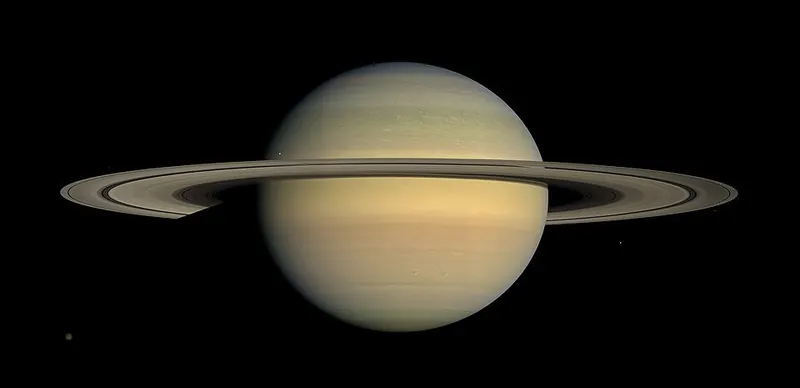
- Outer planets (Jupiter, Saturn, Uranus, Neptune) are giants made mostly of gas (and ice); all four have rings, Saturn's are the easiest to see.
How the planets move
- Every planet orbits the Sun. All the planets orbit in the same direction and in nearly the same flat plane, like runners on a giant flat track.
- The orbits are nearly circular (very slightly oval).
- The further a planet is from the Sun, the longer it takes to complete one orbit. The time for one orbit is that planet's year.
- Each planet also spins on its axis. The Earth spins once every 24 hours — this gives us day and night.
- The Earth orbits the Sun once every 365¼ days — this is one Earth year.
- Moons orbit planets. The Moon orbits the Earth about once a month, and the Earth carries the Moon with it as it orbits the Sun.
| Planet | Average distance from the Sun (million km) | Time for one orbit | Diameter (km) | Type |
|---|---|---|---|---|
| Mercury | 58 | 88 days | 4 880 | rocky |
| Venus | 108 | 225 days | 12 100 | rocky |
| Earth | 150 | 365¼ days (1 year) | 12 760 | rocky |
| Mars | 228 | 687 days (1.9 years) | 6 790 | rocky |
| Jupiter | 778 | 11.9 years | 143 000 | gas giant |
| Saturn | 1 430 | 29.5 years | 120 500 | gas giant |
| Uranus | 2 870 | 84 years | 51 100 | ice giant |
| Neptune | 4 500 | 165 years | 49 500 | ice giant |
Patterns in the table: (1) the further from the Sun, the longer the orbit takes; (2) the four inner planets are much smaller than the four outer planets; (3) Jupiter is the largest planet and Mercury the smallest. Planets further from the Sun are usually colder — but Venus is the hottest planet, even hotter than Mercury, because its thick atmosphere traps heat.
| Object | What it is | What it orbits | Own light? |
|---|---|---|---|
| Sun | A star | Nothing in the Solar System — it is at the centre | Yes |
| Earth | A planet | The Sun | No — it reflects sunlight |
| Moon | Earth's natural satellite | The Earth | No — it reflects sunlight |
For a very long time many people believed that the Earth was at the centre and that the Sun moved around it. In the 1500s and 1600s, astronomers such as Copernicus and Galileo used careful observations (Galileo used one of the first telescopes) to show that the planets, including the Earth, orbit the Sun. In 2006 scientists agreed to call Pluto a dwarf planet, which is why there are now eight planets, not nine. New evidence can change scientific ideas.
2. The Moon and its phases
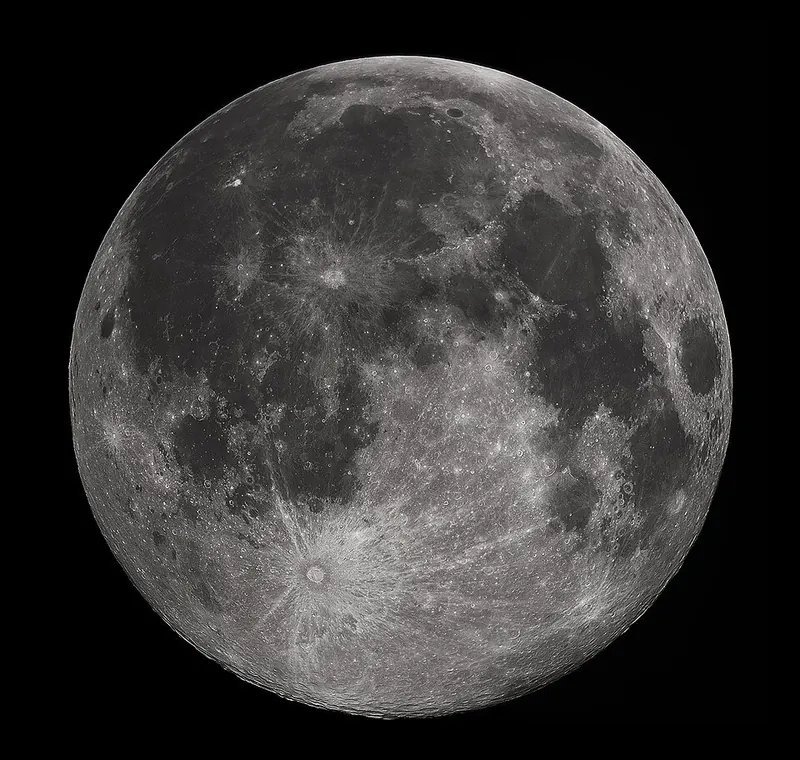
The Moon does not make its own light. We see it because it reflects light from the Sun. At every moment, one half of the Moon is lit by the Sun (the half facing the Sun) and the other half is dark — just like day and night on Earth.
As the Moon orbits the Earth, we see different amounts of its lit half. That is why the Moon seems to change shape. The shapes are called the phases of the Moon. One full cycle of phases, from new moon to the next new moon, takes about 29½ days — about a month. (The word 'month' comes from 'Moon'.)
| Position | Phase | About how many days after new moon | What we see |
|---|---|---|---|
| 1 | New moon | 0 | The lit half faces away from us — we see almost nothing |
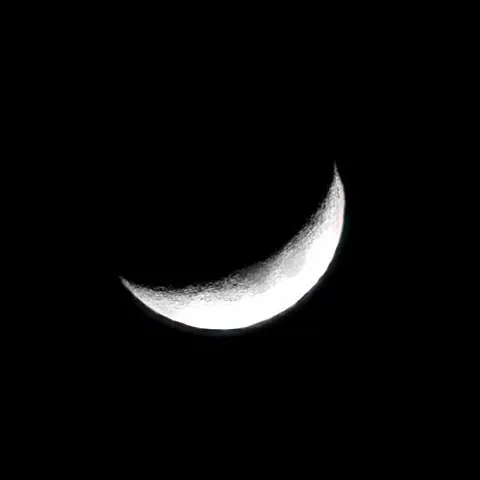
| 2 | Waxing crescent | about 4 | A thin curve, lit on the right |
| 3 | First quarter | about 7 | The right half is lit (a half moon) |
| 4 | Waxing gibbous | about 11 | More than half lit, growing |
| 5 | Full moon | about 15 | The whole face is lit |
| 6 | Waning gibbous | about 18 | More than half lit, shrinking; dark on the right |
| 7 | Third (last) quarter | about 22 | The left half is lit |
| 8 | Waning crescent | about 26 | A thin curve, lit on the left |
- Waxing = the lit part we see is growing (from new moon to full moon).
- Waning = the lit part we see is shrinking (from full moon back to new moon).
- The Moon spins once on its axis in the same time that it takes to orbit the Earth, so we always see the same side of the Moon.
Draw the Moon at the same time every evening (or whenever you can see it) for a month, and write the date under each drawing. This is an observing over time enquiry. Your drawings will show the lit part growing until full moon and then shrinking. In the Islamic (Hijri) calendar each month begins when the first thin crescent (هلال) is seen just after new moon — this is how the start of Ramadan is decided.
- الشمس نجم في مركز المجموعة الشمسية، وحواليها 8 كواكب بتدور في مدارات، بالترتيب: عطارد، الزهرة، الأرض، المريخ، المشتري، زحل، أورانوس، نبتون.
- كل ما الكوكب يبعد عن الشمس، سنته تطول (ياخد وقت أطول عشان يلف لفة كاملة).
- القمر بيدور حوالين الأرض، ومابيطلّعش نور — هو بيعكس نور الشمس.
- نص القمر دايمًا منوّر بالشمس، وإحنا بنشوف أجزاء مختلفة من النص المنوّر وهو بيلف حوالين الأرض ← أطوار القمر (هلال، تربيع، أحدب، بدر) — الدورة كلها حوالي 29.5 يوم.
- أطوار القمر مش بسبب ظل الأرض!
Worked examples
Worked example 1 — Name the four planets nearest to the Sun, in order. [2 marks]
- Mercury, Venus, Earth, Mars (2 marks for all four in the correct order; 1 mark for the correct four in the wrong order).
Worked example 2 — Use the table of planets. (a) Describe the pattern between a planet's distance from the Sun and the time it takes to orbit the Sun. [1] (b) A dwarf planet orbits the Sun at about 5 900 million km. Predict whether it takes more or less than 165 years to orbit the Sun. Explain. [1]
- (a) The further a planet is from the Sun, the longer it takes to orbit.
- (b) More than 165 years, because it is further from the Sun than Neptune (4 500 million km), and Neptune takes 165 years.
Common mistake: describing only one planet ('Neptune takes 165 years'). A pattern must link both things: further → longer.
Worked example 3 — Explain why we can see the Moon at night even though it does not give out light. [2 marks]
- Light from the Sun hits the Moon (1 mark).
- The Moon reflects the light and some of it travels to our eyes on Earth (1 mark).
Worked example 4 — Tonight Nour sees a first quarter Moon (right half lit). (a) What will the Moon look like in about one week? [1] (b) Explain why the Moon seems to change shape. [2]
- (a) A full moon (about 7 days after first quarter).
- (b) Half of the Moon is always lit by the Sun (1 mark). As the Moon orbits the Earth, we see different amounts of the lit half (1 mark).
Common mistake: saying the Earth's shadow covers part of the Moon. That only happens during a lunar eclipse, not in the monthly phases.
Worked example 5 — Describe the movements of the Earth and the Moon. [3 marks]
- The Earth spins on its axis once every 24 hours (giving day and night) (1 mark).
- The Earth orbits the Sun once every 365¼ days / one year (1 mark).
- The Moon orbits the Earth about once a month (about 27 days; the phases repeat every 29½ days) (1 mark).
- Saying the Sun orbits the Earth. The Earth orbits the Sun; the Moon orbits the Earth.
- Saying the Moon gives out its own light. It reflects sunlight.
- Explaining phases with the Earth's shadow. Phases happen because we see different amounts of the Moon's sunlit half.
- Mixing up spin (on its axis → day and night) and orbit (around the Sun → a year).
- Mixing up waxing (growing) and waning (shrinking). Tip: from Egypt, a waxing Moon is lit on the right.
- Thinking the planet nearest the Sun must be the hottest. Venus is hotter than Mercury.
- Order the planets, or name the planet in a given position.
- Label a diagram — Sun, Earth, Moon, orbit; draw an arrow to show the direction of an orbit.
- Read a data table of planets and describe a pattern (distance → time to orbit) or make a prediction for a new object.
- Moon phases: draw or recognise the next phase, put phases in order, say about how many days between phases.
- Explain why the Moon shines (reflection) and why its shape seems to change (the half lit by the Sun + the Moon's orbit).
- Check the words in the question: 'orbit' and 'spin' have different answers.
Practice
- The Sun (a star) is at the centre. Planets in order: Mercury, Venus, Earth, Mars, Jupiter, Saturn, Uranus, Neptune.
- All planets orbit the Sun in the same direction; the further from the Sun, the longer the orbit (the longer the year).
- The Earth spins once in 24 hours (day and night) and orbits the Sun once in 365¼ days (a year). The Moon orbits the Earth about once a month.
- The Moon reflects sunlight. Half of it is always lit; as it orbits the Earth we see different amounts of the lit half — the phases.
- Phases: new → waxing crescent → first quarter → waxing gibbous → full → waning gibbous → third quarter → waning crescent → new (about 29½ days).
All pages in this course
Start here
- Checkpoint 6 Science: The Test and How to Prepare
- Thinking and Working Scientifically: Investigations, Variables, Tables and Graphs
Biology
- The Heart and Circulatory System
- The Lungs and Respiratory System
- Human Reproductive System and Puberty
- Diseases, Hygiene and the Body's Defences
- Food Chains, Food Webs, Energy and Toxins
Chemistry
- Properties of Substances: Melting and Boiling Points, Gases, Conductors
- Reversible Changes and Dissolving
- Boiling and Evaporation
- Chemical Reactions: Reactants, Products and Evidence
Physics
- Mass, Weight and Gravity
- Force Diagrams and Forces on Moving Objects
- Floating and Sinking
- Light: Reflection and Refraction
- Electric Circuits, Symbols, Series and Parallel
Earth and space
Practice tests