Cambridge Primary Checkpoint · Science 0097 · Stage 6 · Biology
Food Chains, Food Webs, Energy and Toxins
How to read food webs and find every food chain in them, where the energy comes from and how it passes along, and how toxic substances build up in top predators.
British & IGCSE › Checkpoint 6 › Checkpoint 6 Science — Complete Course
- Read and interpret food webs, and find the food chains inside them (6Be.01)
- Know that some substances are toxic (poisonous) and damage living things, and that they can move through a food chain or web (6Be.02)
- Identify the energy source of a food chain or web (the Sun) and describe how energy is passed along it (6Be.03)
1. Food chains
A food chain shows what eats what, in a line. Every food chain starts with a producer — a green plant (or alga) that makes its own food using light energy from the Sun. All the other living things in the chain are consumers: they get their energy by eating other living things.
Example: grass → rabbit → fox. The arrow means 'is eaten by', and it also shows the direction the energy flows. The arrow always points towards the eater.
| Word | Meaning | In grass → grasshopper → frog → snake → hawk |
|---|---|---|
| producer | a green plant that makes its own food using light | grass |
| primary consumer | the first consumer; eats the producer | grasshopper |
| secondary consumer | eats the primary consumer | frog |
| tertiary consumer | eats the secondary consumer | snake |
| top predator | the last consumer; nothing in the web eats it | hawk |
| herbivore | eats only plants | grasshopper |
| carnivore | eats only animals | frog, snake, hawk |
| omnivore | eats plants and animals | (e.g. a human, a chicken) |
| predator / prey | a predator hunts and eats another animal, its prey | the frog is the snake's prey |
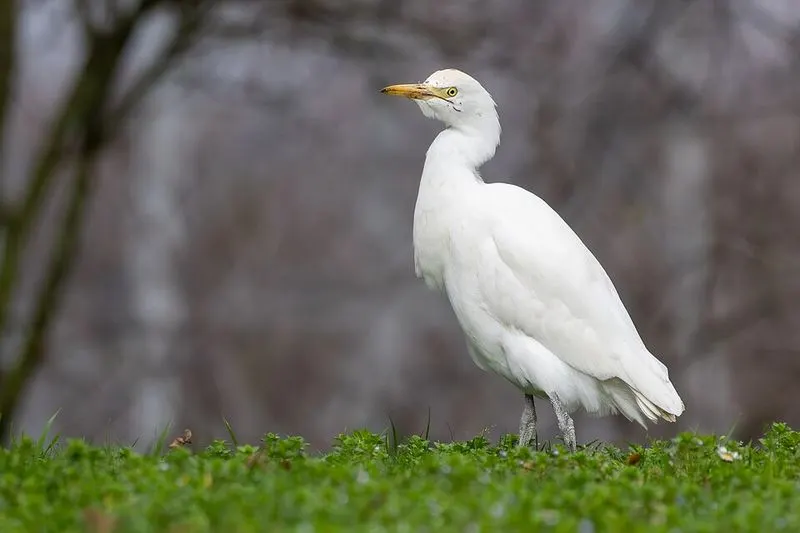
| Word / phrase | Meaning / use |
|---|---|
| food chain | سلسلة غذائية |
| food web | شبكة غذائية — many food chains joined together |
| producer | منتج — a plant that makes its own food |
| consumer | مستهلك — eats other living things |
| predator | مفترس |
| prey | فريسة |
| herbivore | آكل عشب |
| carnivore | آكل لحوم |
| omnivore | آكل كل شيء (نبات ولحوم) |
| energy source | مصدر الطاقة — for food chains this is the Sun |
| toxic | سام — poisonous, causes damage to living things |
| pesticide | مبيد حشري — a chemical used to kill pests on crops |
2. Food webs
In real habitats most animals eat more than one kind of food, and most are eaten by more than one predator. When food chains join together they make a food web. Here is a food web from farmland beside a canal.
How to find every food chain in a web — Start at a producer and follow the arrows upwards until you reach an animal with no arrow leaving it. Then go back and take every other branch. Write each chain with arrows. This web has 7 food chains:
- grass → grasshopper → frog → snake → hawk
- grass → grasshopper → sparrow → hawk
- grass → rabbit → hawk
- wheat → grasshopper → frog → snake → hawk
- wheat → grasshopper → sparrow → hawk
- wheat → mouse → snake → hawk
- wheat → mouse → owl
- Producers: grass and wheat. Top predators: hawk and owl (no arrows leave them).
- Herbivores (eat only producers): rabbit, grasshopper, mouse.
- The hawk eats three things: rabbit, sparrow and snake. The grasshopper is eaten by two animals: frog and sparrow.
- The longest chains have 5 living things (for example grass → grasshopper → frog → snake → hawk).
To count how many food chains include one animal (for example the mouse), count the chains into it (wheat → mouse = 1) and multiply by the routes out of it to a top predator (mouse → snake → hawk, mouse → owl = 2). 1 × 2 = 2 chains.
3. What happens if one population changes?
Everything in a food web is linked, so a change in one population affects others. Use the arrows to reason one step at a time.
| Change | Effect | Reason |
|---|---|---|
| frogs die out | grasshoppers may increase | fewer predators eat them |
| frogs die out | snakes may eat more mice, so mice may decrease | the snake has lost one food, so it eats more of its other food |
| farmer harvests all the wheat | mice decrease | the mouse's only food in this web is wheat |
| mice decrease | owls decrease (or move away) | the owl's only food in this web is the mouse |
A one-word answer ('increase') usually earns only 1 mark. For 2 marks, say what happens and why: 'Grasshoppers increase because fewer frogs are eating them.'
4. Energy in food chains
- The energy source for almost every food chain is the Sun.
- Producers (green plants) capture light energy and use it to make food. The energy is now stored in the plant.
- When a consumer eats, the energy stored in the food passes to the consumer. The arrows show this transfer.
- At each step, a lot of energy is used up or lost — for moving, for keeping warm (heat), and in waste such as droppings. Only a small part is stored in the animal's body and can pass to the next consumer.
- So there is less energy at each step along the chain. That is why food chains are short (rarely more than 5 steps) and why there are fewer top predators than plants or herbivores.
السهم في السلسلة الغذائية معناه «يتؤكل بواسطة» (is eaten by)، وبيشاور ناحية اللي بياكل، وده نفس اتجاه انتقال الطاقة. مصدر الطاقة هو الشمس (the Sun): النبات بياخد طاقة الضوء ويعمل غذاء، وبعدين الطاقة تنتقل للحيوان اللي ياكله. في كل خطوة جزء كبير من الطاقة بيضيع (حركة، حرارة، فضلات)، علشان كده الطاقة بتقل كل ما نطلع في السلسلة.
5. Toxic substances in food chains
Some substances are toxic: they damage or kill living things. Examples include some pesticides (chemicals sprayed on crops to kill insects), heavy metals such as mercury and lead from factory waste, and some chemicals in plastic waste.
A toxic substance can move through a food chain. Many of these substances stay in an animal's body instead of being broken down or passed out. A predator eats many prey animals during its life, so it takes in the toxin from all of them. The toxin builds up, and animals at the top of the chain often have the largest amount — enough to make them ill, stop their eggs hatching, or kill them.
- A farmer sprays pesticide on wheat. A small amount stays on the plants.
- Each mouse eats a lot of wheat, so each mouse takes in some pesticide.
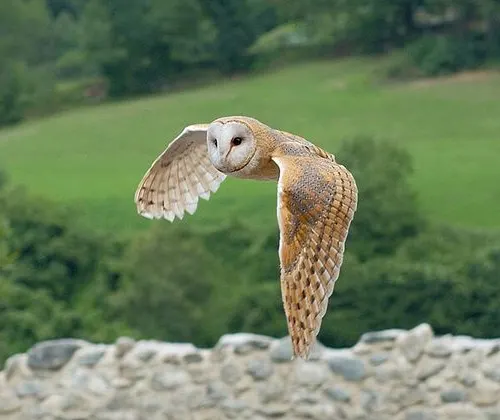
- An owl eats many mice, so it takes in the pesticide from every one of them.
- The owl ends up with much more pesticide in its body than any single mouse — the owl may be harmed even though it never ate any wheat.
Toxic chemicals washed from farms or factories into canals and the River Nile can enter food chains: water plants → small animals → fish → fish-eating birds and people. This is why there are rules about using pesticides and about factory waste.
Worked examples
Worked example 1 — Use the farmland food web. Write down a food chain with four living things that includes the sparrow. [1 mark]
- Find the sparrow. Follow arrows down to a producer: sparrow ← grasshopper ← grass (or wheat).
- Follow arrows up to the end: sparrow → hawk.
- Count: grass, grasshopper, sparrow, hawk = 4.
Answer: grass → grasshopper → sparrow → hawk (or wheat → grasshopper → sparrow → hawk). Common mistake: arrows pointing the wrong way (hawk → sparrow). The arrow points to the eater.
Worked example 2 — What is the source of energy for this food web? [1 mark]
Answer: the Sun (sunlight / light). Common mistake: 'grass' or 'wheat'. The producers capture the energy, but they are not its source.
Worked example 3 — A disease kills most of the snakes. Explain what may happen to the number of frogs. [2 marks]
Answer: the number of frogs may increase (1) because fewer snakes are eating them (1).
Worked example 4 — Each grasshopper in a field has 3 units of pesticide in its body. A frog eats 40 grasshoppers. A snake eats 6 such frogs. How many units of pesticide are in the snake? Assume all the pesticide stays in the animals' bodies. [2 marks]
- Pesticide in one frog = 40 × 3 = 120 units.
- Pesticide in the snake = 6 × 120 = 720 units.
Answer: 720 units. This shows why the top consumer has the most toxin.
Worked example 5 — Explain why energy passes from the rabbit to the fox, but not all of the rabbit's energy reaches the fox. [2 marks]
Answer: the fox eats the rabbit, so the energy stored in the rabbit's body passes to the fox (1). The rabbit used much of its energy for moving / keeping warm / lost it in waste, so only part is passed on (1).
- Drawing arrows from the eater to the food. Arrows go from the food to the eater (direction of energy).
- Starting a food chain with an animal or with the Sun. Food chains start with a producer; the Sun is the energy source but is not written as a link in the chain.
- Stopping a chain too early. Keep going until you reach an animal with no arrow leaving it.
- Saying the toxin is 'made' by the top predator. It comes from its food and builds up.
- Saying energy is 'destroyed'. Say it is used (for movement) or lost (as heat or in waste).
- Complete a food chain or draw arrows on a web — check the direction twice.
- Name a producer, a herbivore, a predator, prey or a top predator from a web.
- Count the food chains, or the animals that eat a named animal.
- Predict and explain the effect of removing one population — say what happens and why (2 marks).
- Toxins: explain why the top predator is harmed most; sometimes a simple multiplication.
- Energy: name the source (Sun) and describe the transfer along the arrows.
Practice
- A food chain starts with a producer; arrows mean 'is eaten by' and point to the eater.
- A food web is many linked food chains — follow every branch from each producer to a top predator.
- The energy source is the Sun; energy passes along the arrows, and some is used or lost at every step.
- Removing one animal changes others: say what happens and why.
- Toxic substances pass along food chains and build up, so top predators often get the most.
All pages in this course
Start here
- Checkpoint 6 Science: The Test and How to Prepare
- Thinking and Working Scientifically: Investigations, Variables, Tables and Graphs
Biology
- The Heart and Circulatory System
- The Lungs and Respiratory System
- Human Reproductive System and Puberty
- Diseases, Hygiene and the Body's Defences
- Food Chains, Food Webs, Energy and Toxins
Chemistry
- Properties of Substances: Melting and Boiling Points, Gases, Conductors
- Reversible Changes and Dissolving
- Boiling and Evaporation
- Chemical Reactions: Reactants, Products and Evidence
Physics
- Mass, Weight and Gravity
- Force Diagrams and Forces on Moving Objects
- Floating and Sinking
- Light: Reflection and Refraction
- Electric Circuits, Symbols, Series and Parallel
Earth and space
Practice tests